


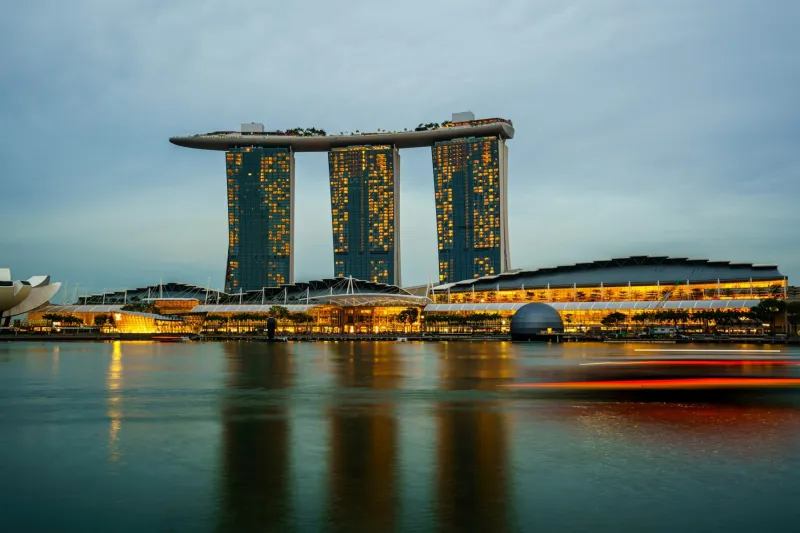
The nation’s economic growth is expected to moderate in 2026.
Last week in Singapore business, the Ministry of Health is set to revamp Integrated Shield Plan riders from April 2026. Full-deductible coverage will be removed, and the annual co-payment cap will increase to at least $6,000, with premiums expected to fall by around 30%.
Economists expect Singapore’s economic growth to moderate in 2026 after a strong 2025 driven by AI-related demand, electronics exports, and a robust construction pipeline. The gross domestic product growth is forecast at 2.1–3%, with potential headwinds including slowing exports and ongoing trade risks such as US tariffs.
The economy is anticipated to normalise rather than face a sharp slowdown, supported by continued activity in finance, construction, and digital services.
Inflation is also projected to rise to around 1.5% in 2026, reflecting domestic cost adjustments and policy measures including the Sustainable Aviation Fuel levy, higher carbon taxes, and rising electricity tariffs. Core inflation is expected to mirror this pace, though offsets such as lower childcare fee caps may help moderate overall price pressures.
The housing market will also see change, as the supply of HDB flats reaching their minimum occupation period (MOP) is set to more than double from 2026. Newer flats may command higher rents, widening estate-level disparities, whilst rising numbers of Employment Pass and work-pass holders are expected to support demand for smaller units and room rentals.
Overall rental growth is forecast to remain moderate at 1% to 3%.
With operators projecting subdued revenue and profit growth alongside rising supply and softer trading metrics, Singapore’s hotel market is also set for a weaker 2025.
Meanwhile, the rollout of robotaxis in Singapore remains a long-term prospect. Widespread adoption is unlikely within the next five years due to public trust issues, regulatory hurdles, technical limitations, and unresolved liability concerns.
Early deployments are expected in controlled environments such as university campuses, industrial parks, and last-mile shuttle routes, with longer-term opportunities in autonomous software, system development, and complementary transport services.
Supporting small businesses, CIMB Singapore has launched the CIMB Founders Card, offering sole proprietors and entrepreneurs easier access to working-capital funding.
The card provides flexible documentation, extended interest-free periods of up to 114 days, and business-friendly perks such as airport lounge access, travel insurance, and discounts on co-working spaces. Early users report that it helps manage seasonal expenses, inventory, and growth initiatives.
In media and entertainment, StarHub and Mediacorp are merging platforms to simplify TV navigation and strengthen local broadcasters against global streaming rivals. The unified system will provide easier access to premium content, including the Premier League and thousands of hours of live sports and Asian programming, whilst also enhancing audience tracking and advertising effectiveness over the coming year.
Singapore has claimed the top spot in the 2025 Global Talent Competitiveness Index, overtaking Switzerland. The city-state ranks first globally for formal education, regulatory environment, and generalist adaptive skills, while improvements in talent retention have further boosted its standing.
Leadership stability in Singapore is reflected in corporate governance, with listed-company CEOs holding the longest average tenure in Asia-Pacific at 8.8 years, well above the regional average of 5.9 years and the global average of 7.2 years.
Despite elevated CEO turnover across the region, most new appointments in Singapore are internal promotions and first-time CEOs, suggesting that boards are balancing stability with transformation.