

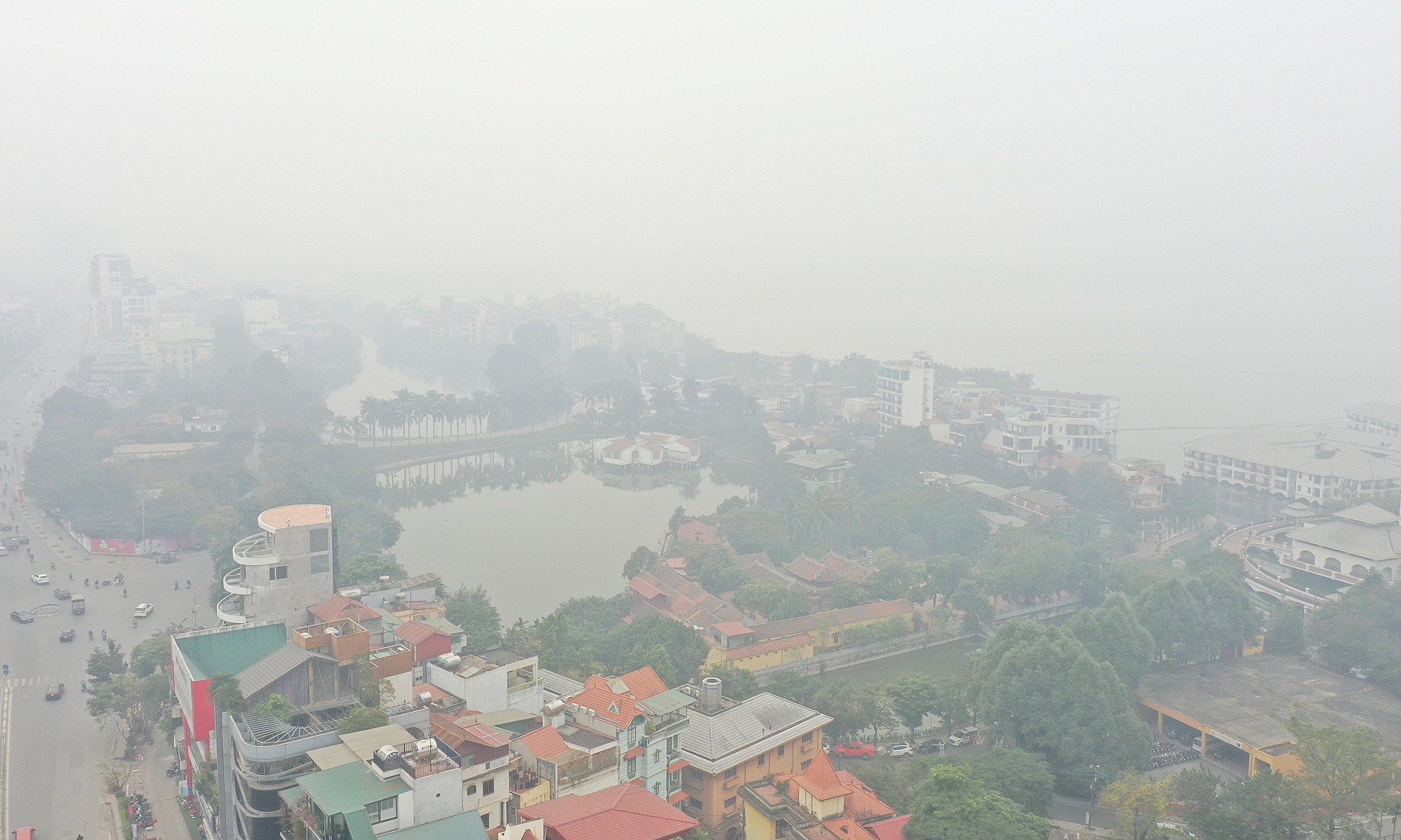
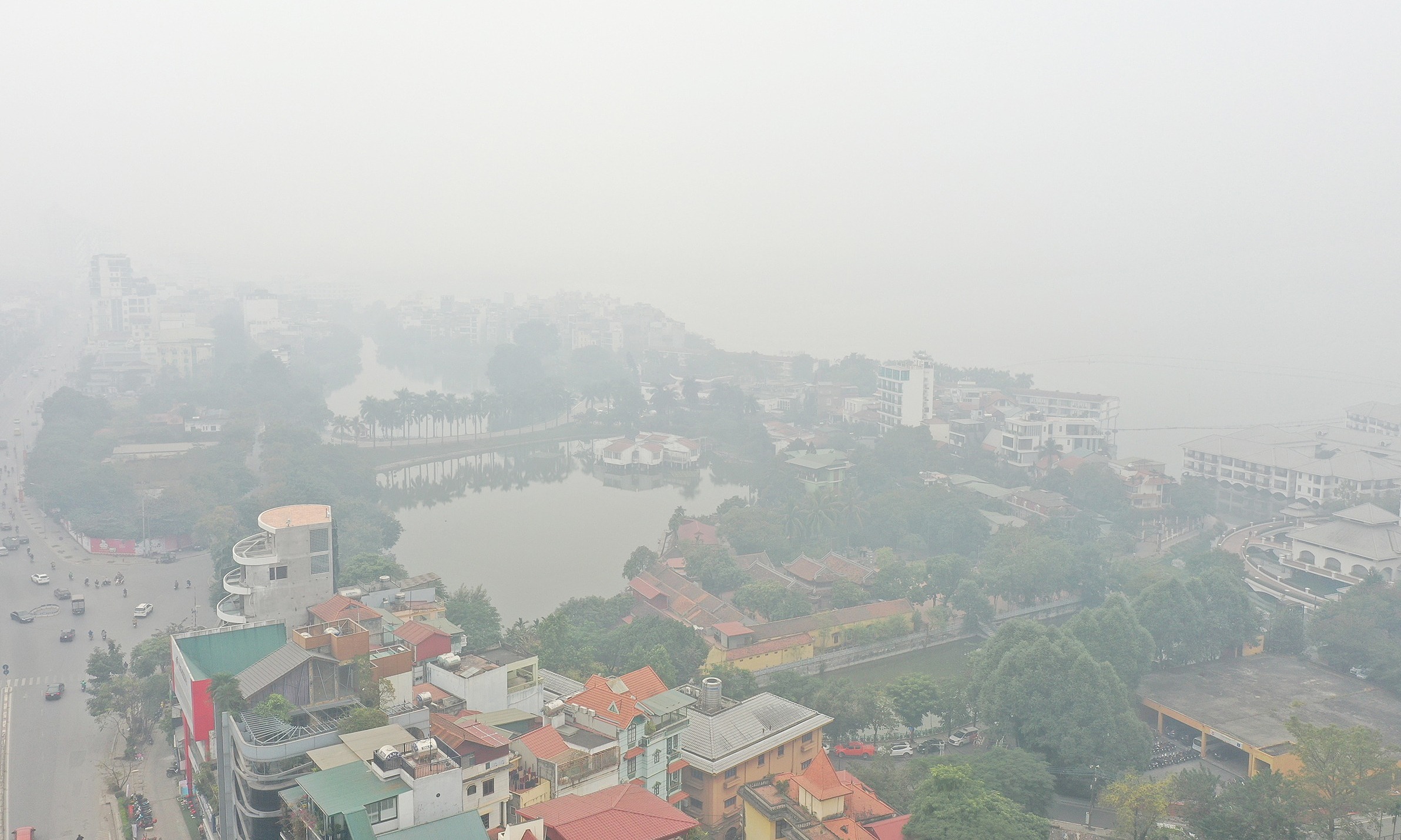
Hanoi is bracing for one of its worst air-pollution spells of the year, pushing the government to roll out emergency measures as stagnant winds and temperature inversion trap toxic particles over the capital and northern provinces.
In a document issued on Nov. 27, the Ministry of Agriculture and Environment warned that the next 10 days will bring “highly unfavorable” weather conditions that sharply limit the dispersion of pollutants. Forecasts show PM2.5 levels could surge, pushing the Air Quality Index (AQI) beyond 150, and potentially over 200 on the worst days, posing direct risks to public health and disrupting economic activity.
To curb emissions, the ministry has asked steel mills, coal-fired power plants, cement factories, chemical producers and other major industrial facilities in northern Vietnam to ensure all emissions-treatment systems run at peak efficiency. Factories are told not to release any untreated exhaust and to consider cutting capacity or postponing major maintenance during days when the AQI reaches “very poor” levels.
Construction sites across Hanoi and neighboring provinces must step up dust-control measures: shielding, mist-spraying, vehicle washing… and may temporarily halt high-dust activities like demolition or excavation when the air hits “hazardous” levels. The Ministry of Construction has been told to enforce these rules at key transport and infrastructure projects.
Traffic management is also being tightened. Local authorities will reroute vehicles at congested gateways and urban corridors to prevent pollution hotspots, while police intensify checks on overloaded trucks, uncovered construction-material shipments, aging vehicles and those emitting black smoke. Environmental police will crack down on illegal burning of industrial waste and household garbage.
Health officials are directing hospitals and media units to issue guidance for vulnerable group: children, the elderly and people with respiratory illnesses on how to protect themselves during high-pollution days. Schools in Hanoi and nearby provinces have been advised to limit outdoor activities whenever air quality reaches poor levels.
Major state-owned corporations are being asked to review operations at facilities in and around Hanoi, ensuring dust and emissions-control systems are stable and compliant. Plants that generate large amounts of pollution, such as cement kilns, steel furnaces and material-grinding lines, are encouraged to shift these processes to times with better weather conditions and to use cleaner fuels.
To monitor compliance, the ministry will use online surveillance systems, satellite imagery and drones to detect abnormal emissions. Interagency task forces will conduct inspections, penalize violators and publicly name companies found flouting the rules.
Hanoi is currently entering its peak pollution season, when cold, stagnant air prevents pollutants from dispersing. Monitoring stations across the city have repeatedly recorded AQI levels in the “moderate” to “unhealthy” range in recent days, with officials warning conditions may worsen before they improve.