


A common sweetener used in sugar-free products could increase the risk of developing deadly liver disease, concerning research has suggested.
A new study has found that a build up of sorbitol can cause a worrying amount of fat to build up in the liver, leading metabolic dysfunction-associated steatotic liver disease (MASLD).
Formerly known as non-alcoholic fatty liver disease, the condition is not linked to heavy drinking—the most commonly known cause of liver problems.
The study, published in the journal Science Signalling, looked at the gut microbiome of zebrafish, and how their bodies reacted if it was somehow compromised.
The gut microbiome is a natural ecosystem made up of billions of ‘friendly’ bacteria and funghi which aids with the break down, digestion and absorption of food.
The researchers found that a depletion in their gut microbiome contributed to the development of liver disease, even when the fish were being fed a normal diet.
This was because as part of the natural digestion process, the body converts glucose into fructose by converting it into sorbitol in the intestine.
Normally, bacteria in the microbiome break down this sorbitol, preventing harm.
But when gut bacteria were removed with antibiotics, sorbitol built up, travelled to the liver, and caused fatty liver.
They noted that adding sorbitol directly to the fishes’ diet caused the same effect.
On the other hand, while stopping sorbitol production or adding bacteria that break it down prevented liver damage.
They concluded that gut bacteria protects against sugar-related liver disease and that sorbitol – which is used as a common sweetener – may increase the risk of fatty liver.
Experts said the findings suggest that ‘sugar free’ alternatives could be just as harmful, if not more so, to liver health than once thought, and urged officials to reconsider their role in a healthy diet.
The study follows on from research detailing the harmful effect of fructose – which is converted into fat by the liver – on the body by Dr Gary Patti, a professor of chemistry, genetics and medicine at Washington University.
According to Dr Patti, sorbitol is essentially ‘one transformation away from fructose’, which has previously been shown to supercharge cancer cells and contribute to steatotic liver disease.
And whilst most of the research on how the body processes sorbitol, often added to sugar-free products but naturally occurring in stone fruits, has focused on its production due to glucose overload, Dr Patti said sorbitol can actually be produced by the gut after eating.
But, for this to happen, blood glucose levels have to be high – hence its affinity with diabetes.
As Dr Patti explained: ‘Sorbitol can be produced in the body at significant levels. But if you have the right bacteria, turns out it doesn’t matter.’
This is because the gut is home to sorbitol-degrading bacterial strains that convert the sugar alcohol into a harmless byproduct.
However, Dr Patti warned: ‘If you don’t have the right bacteria, that’s when it becomes problematic.
‘Because in those conditions, sorbitol doesn’t get degraded and as a result, it is passed on to the liver.’
This depletion in but bacteria can occur when excessive amounts of sugar, or sorbitol itself, are consumed in the diet.
The more glucose and sorbitol consumed, then even if someone has the right ‘friendly’ bacteria that processes it into a harmless byproduct, those gut microbes can become overwhelmed, passing the job on to the liver.
Once in the liver, it is converted into a derivative of fructose, leading to an increase of fat in the organ.
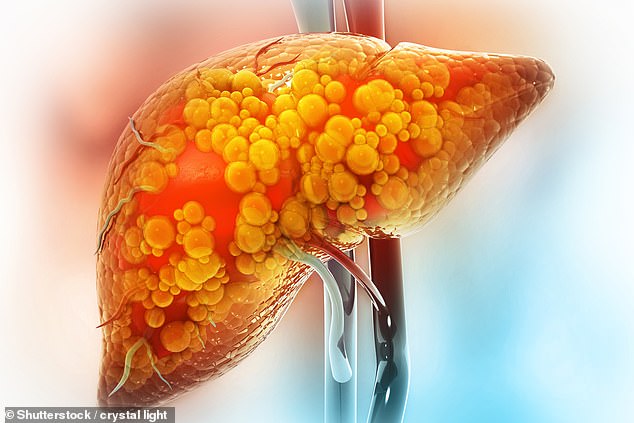
The researchers concluded: ‘Together, these findings show that sorbitol-degrading bacteria in the gut protect against steatotic liver disease and suggest that excessive intake of dietary sorbitol may pose a risk for the development of MASLD.’
Whilst the researchers acknowledged that more studies need to be done to understand the specific mechanisms for how bacteria clear sorbitol, they cautioned that the basic idea that these ‘healthier’ alternatives are harmlessly expelled from the body, may not hold true.
Dr Patti said: ‘We do absolutely see that sorbitol given to animals ends up in tissue all over the body.’
The British Liver Trust estimates MASLD could now affect up to one in five people in the UK—though experts have warned the true figure could be as high as 40 per cent.
Worryingly, around 80 per cent of those affected remain undiagnosed, as the disease often has no obvious symptoms—or it has symptoms that are mistaken for less serious problems.
In most cases, it’s only spotted during routine blood tests or liver function tests carried out for unrelated issues.
Professor Philip Newsome, Director of the Roger Williams Institute of Liver Studies at King’s College London previously told the Daily Mail: ‘People who develop MASLD are often overweight or have diabetes.
‘We’re seeing an increase in liver disease in the UK, and the challenge is that symptoms are often unnoticeable until it’s too late.’

Concerns about the impact artificial sweeteners, which are also added to yoghurt and some cereals, could be having on heart health have circulated for years.
In September this year, Brazilian experts found that drinking just one fizzy drink a day could rapidly raise the risk of brain decline.
Higher consumption of ‘added sugars’, meaning those above the natural content of a food or drink item—just one can of diet drink each day—was linked to a 62 per cent higher risk of brain ageing.
The risk was particularly heightened in those with diabetes, who are more likely to use artificial sweeteners as sugar substitutes, the researchers also found.
Increasing concern has been circulating since 2023 after the World Health Organisation (WHO) controversially classified the artificial sweetener aspartame, found in drinks like Diet Coke, as ‘possibly carcinogenic to humans’.
However, the UN agency ruled it only posed a risk to those who consumed massive amounts and that an 11 stone (70kg) adult could safely drink about 14 cans a day.
And like the most recent study, experts are keen to point out that the potential risks of artificial sweeteners are being overblown compared to the sugar they have replaced.
Read more
- Are artificial sweeteners the hidden culprits accelerating brain ageing, with their innocuous allure masking dire risks of memory decline?
- Are we unknowingly putting ourselves at risk with diet sodas and sweeteners?
- Could diet drinks with artificial sweeteners be the hidden culprits escalating stroke and heart attack risks?
- Think your sweetener is a safe sugar substitute? Uncover the chilling truth about its potential long-term harm on your brain health!
- Could your diet-friendly sugar-free gum be secretly causing gut havoc with artificial sweeteners like sorbitol?